In Nebraska, an attorney just lost their law license — indefinitely — because 57 of 63 citations in one brief were defective. Twenty were complete hallucinations. Three cited cases that do not exist in any jurisdiction on earth. The bar did not impose a fine. They suspended the license. That changes everything.
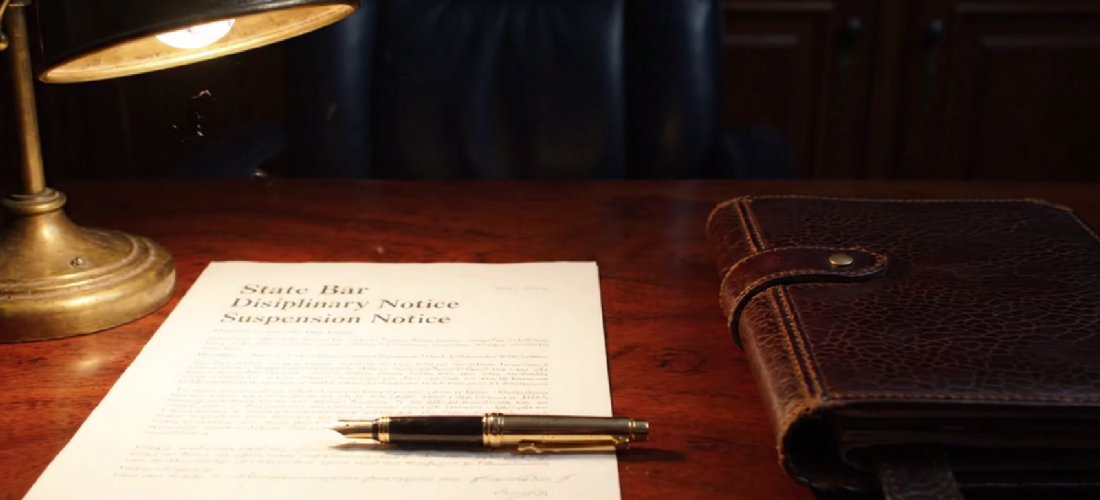
Nebraska attorney Greg Lake has received what appears to be the first indefinite license suspension in U.S. history directly attributable to AI hallucination misconduct. For three years, courts have escalated monetary sanctions in response to AI-fabricated citations — $3,000 in 2023, $30,000 in the Sixth Circuit, $110,000 in Oregon in April 2026. The Nebraska action removes the dollar sign from the equation entirely. When 57 of 63 citations are defective and 20 are fabrications, the bar’s answer is license action, not a fine. Every attorney who has not built a verified, documented activity trail before signing a court filing is operating in the shadow of that precedent today.
What Happened in Nebraska — and What Made This a Suspension?
The Nebraska disciplinary action against attorney Greg Lake stands apart from every prior AI sanctions case in U.S. history on a single dimension: the bar concluded that the pattern of misconduct warranted license suspension rather than monetary penalty. 57 of 63 citations submitted in a single brief were defective. 20 were outright hallucinations — citations to cases that never existed. 3 referenced cases that do not appear in any jurisdiction in any database.
Compare that to the cases that produced fines rather than license action. In the Sixth Circuit, the $30,000 sanction came with a finding of inadequate supervision but no determination of pervasive misconduct. In Oregon, the $110,000 Brigandi sanction — the largest AI hallucination penalty in American legal history — was predicated on 23 fabricated citations and 8 invented quotations, but the court’s finding focused on the specific filing rather than a pattern across the attorney’s practice.
What distinguished Nebraska is what courts imposing the highest sanctions have consistently identified as the threshold question: not whether errors occurred, but whether the attorney had any documented verification process at all. In cases where attorneys can produce a record of verification — query logs, citation cross-checks, timestamped sign-offs — courts have treated the misconduct as correctable error. In cases where no verification record exists, the finding shifts from mistake to abandonment of professional responsibility.
How Does an Attorney Submit 57 Defective Citations?
The anatomy of the Nebraska filing illuminates a pattern every solo and small-firm practitioner should recognize. AI-assisted legal research does not fail catastrophically and obviously. It fails incrementally and plausibly. A hallucinated citation does not look like a nonsense string — it looks like a real citation. The case name sounds real. The reporter citation follows the correct format. The holding, when the AI summarizes it, sounds like something a court would actually say.
The attorney who believes they checked the citations may have run a search and found the case name appeared in search results — in an AI-generated summary referencing the AI’s own prior output. Without a structured verification workflow that cross-checks every citation against a primary source database independently of the AI tool that generated it, the error survives every review step.
This is not a training problem. It is not a character problem. It is a workflow architecture problem. The attorneys who have avoided sanctions in the same period are not necessarily more diligent — they have a documented activity trail that captures their verification process at every step.
The Sanctions Escalation Curve Has a New Ceiling: Your License
The documented escalation of AI hallucination penalties follows a clear trajectory:
- $3,000 — MyPillow case (2023), first AI sanctions fine on record
- $5,000 — Raja Rajan, Philadelphia (April 2026)
- $7,500 — Ohio federal court, contempt finding plus disciplinary referral
- $30,000 — Sixth Circuit (March 2026), inadequate supervision finding
- $110,000 — Oregon federal court, Brigandi (April 2026), largest monetary sanction in U.S. history
- Indefinite license suspension — Nebraska (2026), Greg Lake
The trajectory does not have a ceiling. The Oregon court explicitly rejected a lower sanctions figure. The Nebraska bar bypassed the sanctions framework entirely. The question courts are now asking is not ‘How much is this violation worth?’ It is ‘Did this attorney take their professional obligation seriously enough to create a record of it?’
What Does a Defensible Verification Record Actually Require?
ABA Formal Opinion 512 (2024) establishes the framework: every licensed attorney must maintain a reasonable understanding of any AI tool used in their practice, personally verify all AI-generated output before filing, and disclose AI use to clients when material to the representation. This obligation is enforceable under Model Rules 1.1, 1.4, and 1.5 and cannot be delegated.
That standard, applied to the Nebraska facts, translates into a specific four-step verification record:
- Query log — a documented record of every research query submitted to an AI tool, timestamped, tied to the specific matter
- Source verification — independent cross-check of every citation against a primary source database, not relying on the AI tool’s own output
- Citation cross-check — comparison of the AI-generated summary of a case with the full text of the decision as retrieved from the primary source
- Sign-off timestamp — attorney attestation that the verification steps above were completed, with a cryptographically timestamped record appended to the matter file
The fourth step is the one most practitioners skip — and the one courts focus on when determining whether misconduct was pervasive or correctable. A timestamped sign-off record is not just documentation. It is the evidence that answers ‘Show me your verification process’ with something other than ‘I believed I checked.’
What the Four-Step Compliance Record Looks Like in Practice
Lex Arca Legal Vault’s Sentinel jurisdictional gate generates an append-only, tamper-evident record of every research session automatically. The Neural Librarian HUD captures every query submitted and every document retrieved. The Verification Attestation workflow produces a timestamped sign-off record that documents the attorney’s review of the AI-assisted output. The combined record is the documented activity trail that answers every question a bar investigator will ask.
This is not a luxury architecture for BigLaw. It is the baseline compliance record that the Nebraska case has now established as the standard of practice. The attorneys who build this infrastructure before they need to defend it are not over-preparing. They are meeting the bar’s stated expectation.
Every competitor in the legal AI market — Harvey, CoCounsel, Legora — routes AI inference through third-party cloud infrastructure they control. None produces the append-only, tamper-evident documented activity trail that constitutes a compliance record under ABA Formal Opinion 512. Lex Arca was built from the ground up to produce that record — not as a feature, but as the architecture.
KEY TAKEAWAYS
- Nebraska attorney Greg Lake received what appears to be the first indefinite license suspension in U.S. history attributable to AI hallucination misconduct — 57 of 63 citations were defective, 20 were outright fabrications.
- The sanctions escalation curve now extends beyond monetary penalties: courts and bar authorities are treating the absence of a documented verification workflow as evidence of pervasive misconduct rather than correctable error.
- Every licensed attorney using AI-assisted research tools should build a four-step verification record before their next court filing: query log, source verification, citation cross-check, and timestamped sign-off.
- Lex Arca Legal Vault provides a documented, verifiable AI activity trail designed to support attorney compliance workflows under ABA Formal Opinion 512.
- Calculate your firm’s billing leakage and get early access at https://calculator.lex-arca.com.
Kim Xi Harris is the Founder and Platform Architect of Lex Arca™, an AI-native litigation intelligence and compliance platform for solo and small-firm attorneys. She is a Cornell Women’s Entrepreneur Program graduate, SBA Women in Business Champion Award recipient, WOSB certified, and holds five Google AI certifications. Calculate your firm’s billing leakage and join the VIP waitlist at https://calculator.lex-arca.com — or reach us at legalvault@lex-arca.com.