According to Clio’s 2026 Legal Trends Report for Solo and Small Law Firms (May 2026, https://www.clio.com/about/press/2026-solo-small-firm-report/), 71% of solo practitioners and 75% of small firms are now using AI to complete legal work — yet fewer than 33% have seen any revenue increase from it, compared to nearly 60% of enterprise firms. The gap between AI adoption and AI compliance is not a policy problem. It is an architecture problem.
Whether your AI prompts are discoverable in 2026 depends on four factors: who created the prompt, for what purpose, under what attorney-client relationship, and under what terms of service. Courts across the country have now ruled in enough distinct contexts — from attorney work product to expert methodology to protective orders on discovery materials — that a framework is taking shape. For solo and small-firm litigators, the practical answer is this: attorney-crafted prompts in furtherance of litigation strategy are likely protected as opinion work product, but only if the underlying AI tool does not expose client data to third parties through its terms of service. The tool’s architecture determines the protection.
What Are the Four Categories of AI Prompt Discovery Courts Are Now Addressing?
Arnold & Porter’s eDiscovery practice published a synthesis of the emerging case law on May 19, 2026, identifying four distinct categories of AI prompt treatment that courts have now addressed — each with different outcomes and different implications for litigators using AI in their practice.
The four categories are: attorney-crafted prompts used in furtherance of litigation strategy; prompts generated by parties or clients without counsel’s direction; prompts used by expert witnesses as part of their methodology; and AI use on discovery materials governed by protective orders. Each category produces a different result, and understanding which category your AI use falls into is now a threshold question before any filing.
The framework matters for solo and small-firm litigators specifically because enterprise firms have legal ops teams and general counsel to navigate these issues before they reach the court. The solo practitioner making day-to-day decisions about which AI tools to use, how to use them, and what documentation to keep is making compliance decisions without that infrastructure — in an environment where the case law is moving faster than bar guidance.
When Are Attorney-Crafted AI Prompts Protected as Work Product?
Attorney-crafted prompts used in furtherance of litigation strategy are likely protected as opinion work product — the near-absolute tier of protection under Federal Rule of Civil Procedure 26 — because they contain counsel’s mental impressions. Two federal courts have now reached this conclusion.
In Tremblay v. OpenAI, Inc. (N.D. Cal. 2024), the court held that attorney-crafted prompts reflect counsel’s strategic thinking and are therefore protected. In Concord Music Group, Inc. v. Anthropic PBC (N.D. Cal. May 2025), the court reached the same conclusion regarding attorney-crafted investigative prompts and their outputs. Both decisions treat the attorney’s prompt as the functional equivalent of an attorney’s research notes — protected because it reveals how counsel is thinking about the case, not just what information they retrieved.
The critical qualifier in both cases is that the attorney must be the one crafting the prompts in furtherance of litigation strategy. The protection flows from the attorney’s mental impressions being embedded in the prompt. A paralegal’s prompt, a client’s prompt, or a prompt generated without counsel’s direction does not carry the same protection — and in some circumstances, carries none at all.
Attorney-crafted AI prompts in furtherance of litigation strategy receive the strongest protection. Client-generated and expert-generated prompts receive less protection — and in some cases, none. The identity of the prompt author is now a litigation strategy question.
What Happens When a Client — or a Party — Creates AI Prompts Without Counsel?
The protection that attaches to attorney-crafted prompts does not automatically extend to prompts created by a party or client acting without counsel’s direction. The case law here is fact-specific, but two 2026 decisions bracket the range of outcomes.
In United States v. Heppner (S.D.N.Y. Feb. 2026), Judge Rakoff held that 31 documents a criminal defendant created by prompting a publicly available AI platform were neither privileged nor work product. The reasons were layered: the platform was not an attorney and expressly disclaimed providing legal advice, eliminating both the attorney-client relationship and any claim that the purpose was to obtain legal advice. More significantly, the platform’s terms of service permitted data collection and disclosure to third parties — including government authorities — negating any expectation of confidentiality. The defendant’s intent to later share the outputs with counsel did not save the claim.
Warner v. Gilbarco, Inc. (E.D. Mich. Feb. 2026) reached a different result on different facts. A pro se plaintiff used a generative AI tool to prepare litigation materials, and the defense moved to compel production of all AI-related materials. The court denied the motion, drawing a distinction that matters for all litigators: while attorney-client privilege is waived by disclosure to a third party, work product protection is waived only by disclosure to an adversary or conduct likely to result in the material reaching an adversary. The court held that inputting litigation materials into an AI tool does not constitute disclosure to an adversary — because AI tools are tools, not persons.
The reconciling principle: generative AI neither automatically confers protection nor automatically destroys it. Courts are asking the same questions they have always asked — whether there was a qualifying relationship, whether confidentiality was maintained, and whether the materials were prepared in anticipation of litigation and reflect mental processes. The AI tool’s terms of service are now a threshold document in that analysis.
Are Expert Witnesses’ AI Prompts Discoverable Under Rule 26?
Yes — and the May 2026 ruling in Conservation Law Foundation v. Shell Oil Co. (D. Conn. May 18, 2026) makes this explicit. The court held that AI prompts used by an expert witness to narrow a document production for analysis are discoverable as part of the expert’s methodology under Rule 26(b).
The reasoning is straightforward: expert methodology is subject to discovery; using AI to narrow a document set is part of that methodology; the prompts are therefore within scope. This is not a privilege or work product analysis. It is the ordinary scope of expert discovery applied to a new context.
For solo litigators who retain or work with expert witnesses, this ruling has immediate practical implications. Any expert using AI tools in their analysis — to review documents, identify patterns, or synthesize findings — should expect that their AI prompts will be sought in discovery. The expert’s workflow, the tool they used, the prompts they entered, and the outputs they relied on are all now properly within the scope of expert discovery under Rule 26. Counsel retaining experts should address AI use in the engagement process, not after opposing counsel issues a subpoena.
What Are Courts Now Requiring in Protective Orders Governing AI Use on Discovery Materials?
Two 2026 rulings have established the protective order floor for AI use on discovery materials — and the standard they set is the clearest signal yet that the architecture of an AI tool, not just its contractual terms, is now a threshold litigation question.
In Morgan v. V2X, Inc. (D. Colo. Mar. 2026), the court established a minimum standard: the AI provider must be contractually prohibited from training on user inputs and disclosing them to third parties, must allow deletion of data on request, and — where third-party disclosure is essential to service delivery — must bind that third party to equivalent protections. Critically, the court required that a party relying on these safeguards retain written documentation of them. The protective order is not enough. Documentation of the tool’s compliance with the order is required.
Jeffries v. Harcros Chemicals, Inc. (D. Kan. Mar. 2026) went further, prohibiting consumer AI tools not only for confidential documents but for all discovery materials. The court cited the practical impossibility of retrieving or deleting data once incorporated into a model, and the risk of violating domestic and international data privacy laws. The ruling makes clear that consumer AI platforms — even those with privacy policies — present structural risks that protective orders cannot fully address once data has been ingested.
The practical implication for the solo litigator: tool selection is now a discovery management decision, not an operational preference. A local-first private vault that architecturally excludes client data from third-party infrastructure — rather than contractually promising not to share it — satisfies the Morgan standard without requiring a protective order negotiation in every case. The architecture is the documentation. An ABA Opinion 512 compliance workflow built into the vault creates the written record Morgan requires, automatically, as a byproduct of normal case research.
‘AI tool selection is a structural discovery issue that belongs in protective order negotiations, not an afterthought once a dispute arises.’ — Arnold & Porter eData Edge, May 2026
What Does This Framework Mean for Solo Litigators Choosing AI Tools in 2026?
The framework emerging from Tremblay, Concord Music, Heppner, Warner, Conservation Law Foundation, Morgan, and Jeffries produces four practical rules for solo and small-firm litigators evaluating AI tools right now.
First: read the terms of service before the deposition, not after. The Heppner ruling turned on the platform’s privacy policy permitting disclosure to government authorities. If your AI tool’s terms of service permit data collection, training on inputs, or disclosure to third parties, those terms can defeat privilege claims and expose client data in discovery. This is not a hypothetical risk. It is the outcome in a decided federal case.
Second: match the tool to the user. Attorney-crafted prompts in furtherance of litigation strategy receive the strongest protection. Prompts generated by paralegals, clients, or staff without attorney direction receive significantly less. The workflow that produces protected AI output is one where the attorney is personally directing the inquiry — and where that direction is documented.
Third: address expert AI use in the engagement letter. Conservation Law Foundation makes clear that expert AI prompts are discoverable methodology. A litigation intelligence platform for solo firms that documents what AI tools an expert used, what prompts they entered, and what outputs they relied on — as part of the case vault — gives counsel the record they need before opposing counsel requests it.
Fourth: select tools whose architecture satisfies Morgan without requiring a protective order in every case. Consumer AI platforms require case-by-case protective order negotiations to address the data ingestion risks Jeffries identified. A Neural Billing with cryptographic time-stamping system that operates from a local-first private vault — keeping client data architecturally excluded from third-party infrastructure — produces the written documentation Morgan requires as a standard output of the compliance workflow, not as special litigation preparation.
As of May 2026, more than 300 standing court orders govern AI use in filings across the United States. The courts that issued those orders are now also addressing, in real litigation, what happens to AI-generated work product in discovery. The compliance question and the discovery question are the same question. The architecture of the tool you choose answers both.
Key Takeaways
- Courts in 2026 have established a four-category framework for AI prompt discovery: attorney-crafted litigation prompts receive near-absolute work product protection; party-generated prompts without counsel direction receive significantly less; expert AI prompts are discoverable methodology under Rule 26; and protective orders governing consumer AI use on discovery materials now require documented proof of tool compliance, not just contractual terms.
- The architecture of an AI tool — specifically whether it routes client data through third-party infrastructure subject to disclosure — is now a threshold factor in privilege and work product analysis, as established in U.S. v. Heppner (S.D.N.Y. 2026), Morgan v. V2X (D. Colo. 2026), and Jeffries v. Harcros Chemicals (D. Kan. 2026).
- Solo and small-firm litigators must review the terms of service of every AI tool in their current workflow, address expert AI use in engagement letters, and ensure that their AI tool selection satisfies the Morgan protective order standard — through architecture, not just contract language.
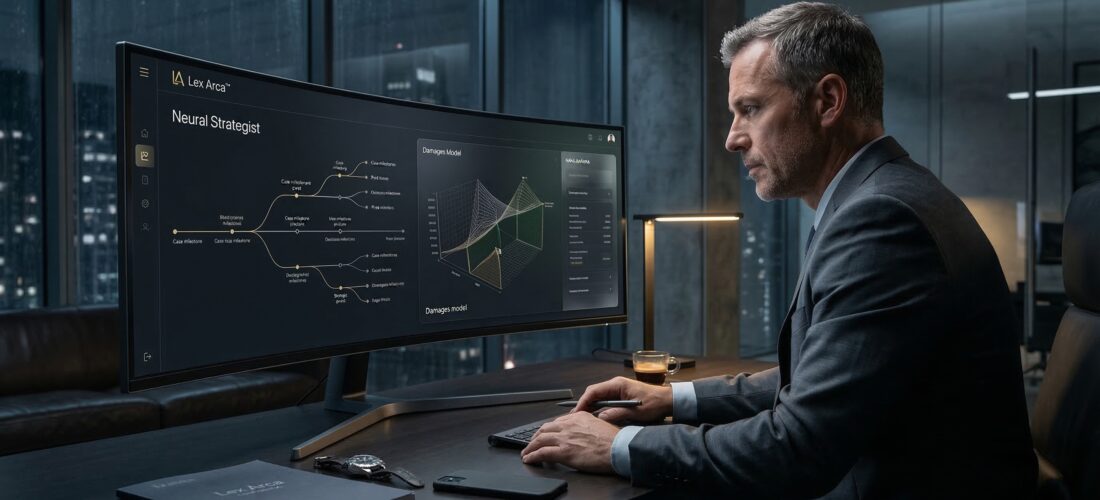
- Lex Arca Legal Vault provides a documented, verifiable AI activity trail designed to support attorney compliance workflows — operating from a local-first private vault that architecturally excludes client data from third-party infrastructure and produces the written compliance documentation Morgan v. V2X requires as a standard output.
- Calculate your firm’s billing leakage and get early access at https://calculator.lex-arca.com.
About the Author: Kim Xi Harris is the Founder and Platform Architect of Lex Arca™ Legal Vault, an AI-native litigation intelligence and compliance platform for solo and small-firm attorneys. She is a Cornell Women’s Entrepreneur Program graduate, SBA Women in Business Champion Award recipient, WOSB certified, and holds five Google AI certifications. Calculate your firm’s billing leakage and join the VIP waitlist at https://calculator.lex-arca.com — or reach us at legalvault@lex-arca.com