By Kim Xi Harris | Founder & Platform Architect, Lex Arca™ Legal Vault | Calculate your firm’s billing leakage | legalvault@lex-arca.com
According to Clio’s 2026 Legal Trends Report for Solo and Small Law Firms (May 2026, https://www.clio.com/about/press/2026-solo-small-firm-report/), 71% of solo practitioners and 75% of small firms are now using AI to complete legal work — yet fewer than 33% have seen any revenue increase from it, compared to nearly 60% of enterprise firms. The gap between AI adoption and AI compliance is not a policy problem. It is an architecture problem.
A federal magistrate judge recently ordered production of the actual AI prompts an expert witness used in preparing their opinion, treating prompt history as discoverable material rather than protected work product. For any attorney or expert using AI on a matter, the ruling means the prompts themselves — not just the final output — can now be compelled in discovery, and firms without a documented, retrievable record of that prompt history have no way to comply.
What Did the Magistrate Judge Actually Order?
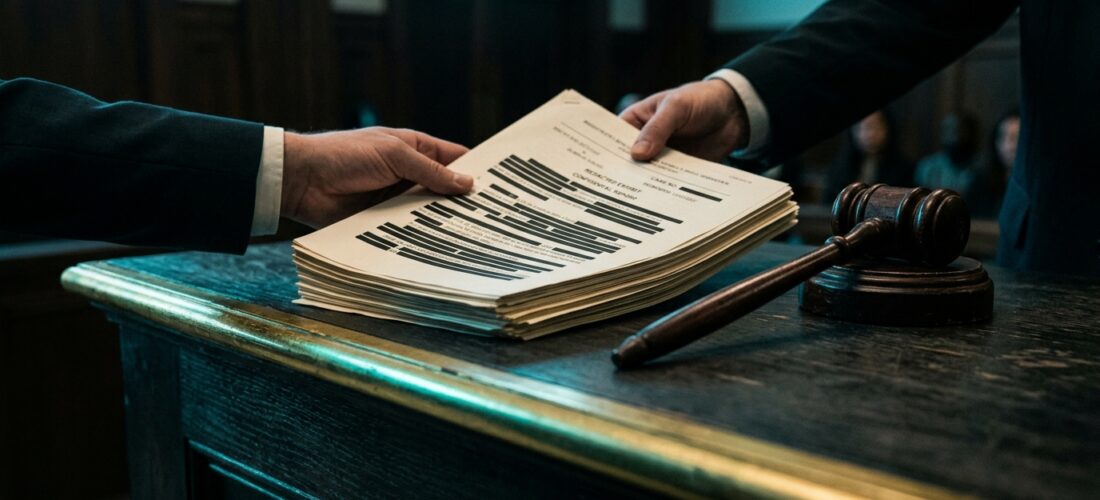
In a recent discovery dispute, opposing counsel sought production of the AI prompts an expert witness used while preparing a report, arguing the prompt history was relevant to testing the reliability of the AI-assisted methodology behind the opinion. The magistrate judge agreed, ordering production of the prompts as discoverable material. The ruling did not treat the prompt-drafting process as shielded thought process or work product in the way an attorney’s internal notes might be protected — it treated the prompts as part of the factual record behind the expert’s conclusions, subject to the same discovery obligations as any other input to that opinion.
This is a meaningful expansion of what counsel should expect to be asked to produce when AI touches any part of case preparation, whether by an expert witness, a paralegal, or an attorney directly.
Why Does This Matter Beyond Expert Witness Work?
The reasoning behind compelling prompt production doesn’t logically stop at expert witnesses. If a court will order an expert to produce the prompts behind an opinion because they bear on the reliability of that opinion, the same logic extends to any AI-assisted work product entered into a case — research memos, draft pleadings, damages calculations, or discovery review summaries. Opposing counsel now has a clear precedent to point to when requesting the same category of material from an attorney’s own AI use, not just an expert’s.
For firms using generic AI platforms like ChatGPT or Microsoft Copilot for legal work — nearly half of small-firm AI users, according to Clio’s 2026 data — this creates an immediate exposure problem. Consumer AI platforms were not built to retain, timestamp, or produce a defensible record of prompt history on demand. If a firm cannot locate or authenticate its own prompt history months into litigation, it faces the same discovery risk this expert witness just did, with far less time to prepare a response.
What Does the Broader Court Order Landscape Already Require?
This ruling did not emerge in a vacuum. As of 2026, more than 300 standing court orders nationwide address AI use in filings — an increase of more than 200 orders in the second half of 2025 alone. These orders vary in scope, but the direction is consistent: courts increasingly expect attorneys to be able to document, not merely assert, how AI was used in preparing a filing.
Florida
The Florida Supreme Court’s Standing Committee order, SC2026-0673 / AOSC26-12, effective June 15, 2026, moves the state’s AI-use requirements from advisory guidance toward enforceable expectation, requiring attorneys to be prepared to document their review and verification process for AI-assisted filings.
Colorado
Colorado’s SB 26-189, signed May 14, 2026 and effective January 1, 2027, similarly signals a shift toward documented verification obligations for attorneys using generative AI in practice, ahead of full statutory implementation.
New York
New York’s 22 NYCRR Part 161, effective June 1, 2026, adds to the growing body of state-level rules addressing AI use by attorneys, reinforcing that courts across multiple jurisdictions are converging on the same expectation: AI use must be documented, not merely disclosed after the fact.
California
California’s SB 574, having cleared the Senate 39-0 and now advancing through Assembly committee review, would go further still — requiring attorneys to personally verify and correct AI-generated content and to personally read and verify every citation in a filing before signing it, regardless of whether AI was used to prepare it.
Taken together, these developments point in one direction: the era of good-faith assurance about AI use in legal practice is ending, replaced by an expectation of documented, producible evidence.
What Happens When a Firm Can’t Produce Its Own Prompt History?
Consider the practical mechanics. A firm using a consumer AI platform for research or drafting typically has no centralized, timestamped log of what was asked, when, or by whom — the prompt history lives, if it lives anywhere accessible at all, scattered across individual browser sessions and chat histories that were never built for litigation retention. If opposing counsel requests that material under the reasoning applied in this ruling, the firm faces a choice between an incomplete, hard-to-authenticate production or an admission that the record doesn’t exist.
Neither outcome is good. An incomplete production invites further motion practice and credibility questions. An admission that no record exists raises the uncomfortable question of what, exactly, the firm’s AI verification process actually looked like — the same question ABA Formal Opinion 512 already requires every attorney using AI to be able to answer.
What Would a Documented, Producible Record Actually Require?
A defensible answer to a prompt-production request requires three things: an activity trail that is retained automatically rather than manually, a record that is tamper-evident so its authenticity isn’t itself subject to challenge, and a format that can be produced without exposing unrelated client matters or privileged material beyond the scope of the request.
Lex Arca™ Legal Vault was built around exactly this requirement. Its local-first private vault architecture means Lex Arca™ is architecturally excluded from your data — not by policy, not by contract, but by design — and every AI-assisted interaction within the platform generates an append-only, tamper-evident activity trail and a Verification Attestation, giving firms a documented and verifiable record ready to answer exactly the kind of discovery request this ruling now makes possible.
From Kim’s Chair: The Questions I Would Have Asked
I did not build Lex Arca™ from studying case law about discovery disputes. I built it from a chair — the client’s chair — where I watched the gap between what a firm says it does with AI and what it can actually document play out in real time. When I read about a court ordering production of an expert’s prompts, I don’t see a narrow evidentiary ruling about one expert witness. I see every client whose case depends on an attorney’s AI use being one discovery request away from finding out whether that attorney can actually back up what they’ve been telling them all along.
If I were sitting in that discovery conference as the client, here is what I would ask:
1. If opposing counsel asked for the AI prompts behind my case’s research or drafting, could my attorney produce them today, or would they need to reconstruct them from memory?
2. Is the record of AI use on my matter something my attorney’s firm controls and retains, or something that lives inside a consumer platform outside their control?
3. If this ruling extends beyond expert witnesses to attorney work product, has my firm already adjusted its AI practices, or is it waiting to be the test case?
4. Would the AI-assisted work on my matter hold up to the same scrutiny this expert witness’s opinion just did?
5. What happens to my case if my attorney can’t produce a defensible record when asked?
And if I were your client — sitting across from you — here is what I would have asked you:
1. Do you already have a retained, timestamped record of every AI prompt used on my matter, or would you need to search for it if asked?
2. If a magistrate judge ordered you to produce your AI prompt history tomorrow, what would that production actually look like?
3. Are you using the same AI tools for my case that this expert witness used, and if opposing counsel asked for your prompts, would the answer be different?
4. Has this ruling changed how you’re documenting AI use on active matters, or does it need to?
5. If the record doesn’t exist yet, when will it?
The question this ruling raises isn’t whether AI prompts can be ordered produced — that question has now been answered. The question every firm needs to answer next is whether they’d survive being asked.
Key Takeaways
1. A federal magistrate judge ordered production of the AI prompts behind an expert witness’s opinion, treating prompt history as discoverable rather than protected material.
2. The reasoning extends logically beyond expert witnesses to any AI-assisted attorney work product, creating new discovery exposure for firms without a documented prompt history.
3. Firms should move immediately from ad hoc AI use toward a retained, tamper-evident record of AI activity that can withstand a production request without reconstruction.
4. Lex Arca™ Legal Vault provides a documented, verifiable AI activity trail designed to support attorney compliance workflows within an litigation intelligence platform for solo firms.
5. Calculate your firm’s billing leakage and get early access at https://calculator.lex-arca.com.
About the Author |Kim Xi Harris is the Founder and Platform Architect of Lex Arca™, an AI-native litigation intelligence and compliance platform for solo and small-firm attorneys. She is a Cornell Women’s Entrepreneur Program graduate, SBA Women in Business Champion Award recipient, WOSB certified, and holds five Google AI certifications. Calculate your firm’s billing leakage at https://calculator.lex-arca.com — or reach us at legalvault@lex-arca.com. See our related coverage on the ABA Opinion 512 compliance workflow for how documented verification applies across jurisdictions.